 ☕️
☕️Salman A. Farisi 陳成文(he/him)
Graduate Research Assistant
About Me
I’m Salman or Cheng-Wen. I am currently a research assistant at National Tsing Hua University (NTHU) Institute of Astronomy, working with Prof. Andrew P. Cooper using DESI Milky Way Survey survey.
My current research focuses on near-field cosmology and galactic dynamics. I currently studying stellar streams — the tidal debris of disrupted globular clusters and dwarf galaxies — using numerical simulations and matching with observational counterparts. These structures can help us better understand the Galaxy’s merger history and dark matter on local scales.
I earned my B.Sc. in Astronomy from Bandung Institute of Technology (ITB) and, before returning to academia, built machine learning systems in industry. Starting December 2026, I will pursue my PhD at the University of Edinburgh with Prof. Sergey Koposov, focusing on dark matter substructure and the stellar halo of the Andromeda galaxy.
Outside research, each degree has come with a side quest: I mastered mountaineering during my undergraduate, mahjong during my master’s, and I’m going for mastering piano during my PhD. I really enjoying play mahjong, go hiking and watch fireflies whenever I can.
- Galactic archaeology
- Near-field cosmology
- High-performance computing and numerical simulation
- Machine learning, AI and statistics
- Image processing and computer vision
PhD in Astronomy
University of Edinburgh
MSc in Astronomy
National Tsing Hua University
BSc in Astronomy
Bandung Institute of Technology
I study the fossil record of the Milky Way: the stellar streams, disrupted globular clusters, and accreted dwarf galaxies that trace how our Galaxy came together. Using data from the DESI Milky Way Survey and galactic dynamics simulations, I look for tidal substructures in the halo and try to figure out where they came from.
Right now I’m using the particle-spray (Mock Stream) algorithm to detect tidal streams across the DESI Legacy Survey footprint, including tracing the LMS-1 stream and its globular clusters back to an ancient accretion event. More broadly, I’m curious how dark matter, both as a smooth halo and as clumpy subhalos, shapes the way stellar streams look and how easy they are to detect.
I recently listening to this on repeat if I need to step up the game
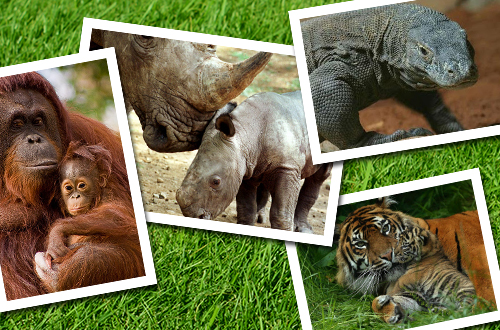
I’m calling on everyone to stop deforestation and poaching to help preserve the habitat of wild animals, especially in Indonesia rainforest. I support the rights of Sumatran tigers and other endangered species to live alongside humans, not as a threat to us.